Dusk - desk lamp
Ambient Break Indicator
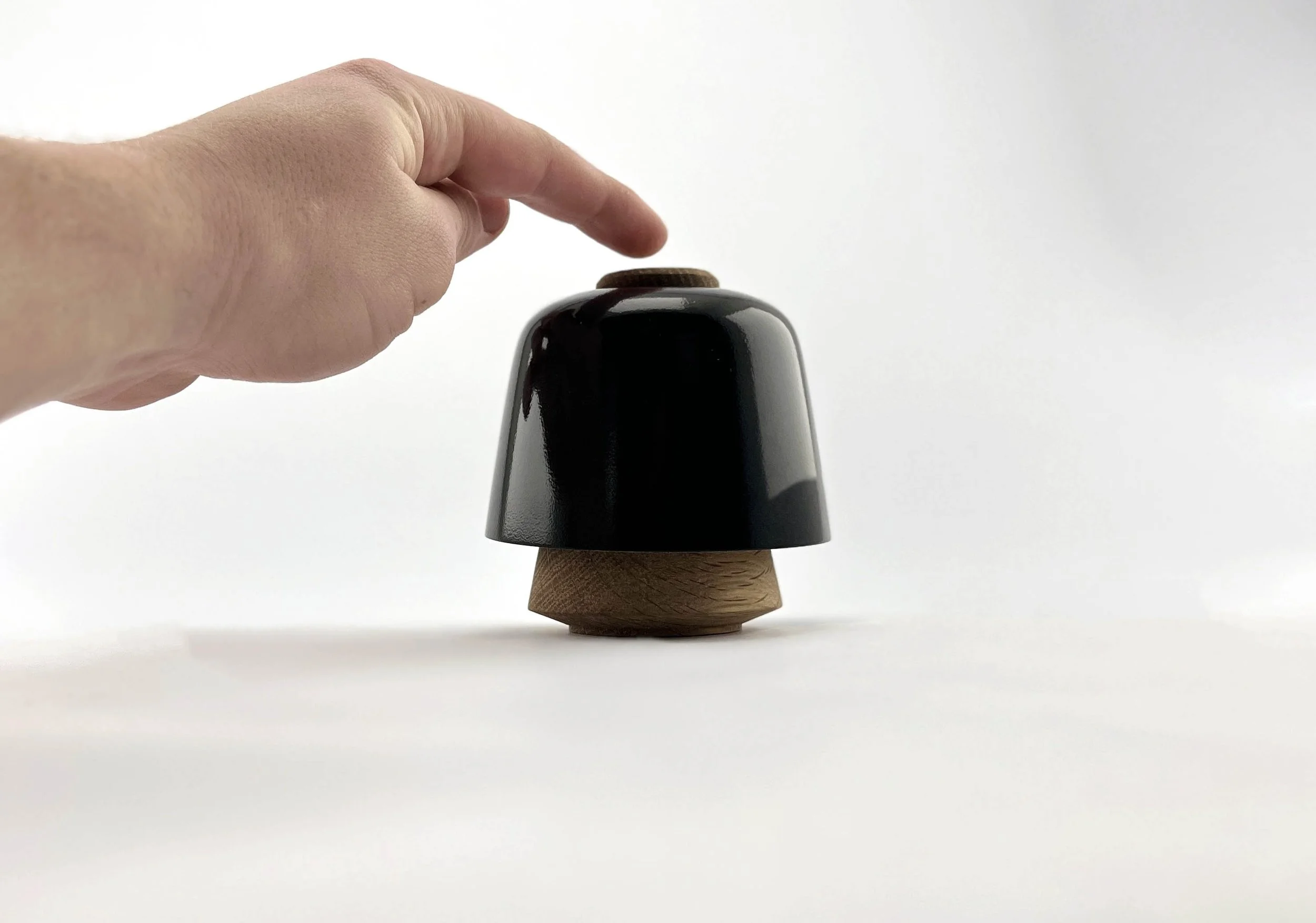
Challenge
The goal was to design an ambient lamp that helps users recognize when it’s time to take a break without interrupting their workflow. The challenge was creating a light that subtly signals the end of a set time with a smooth, decaying dimming effect, balancing aesthetics, usability, and electronics integration.
This project is positioned for the consumer product and industrial design community, specifically within workplace and home-office contexts. The lamp is intended for people who struggle to take breaks while working or studying and encourages mindful break-taking practices that are often ignored in focused environments.
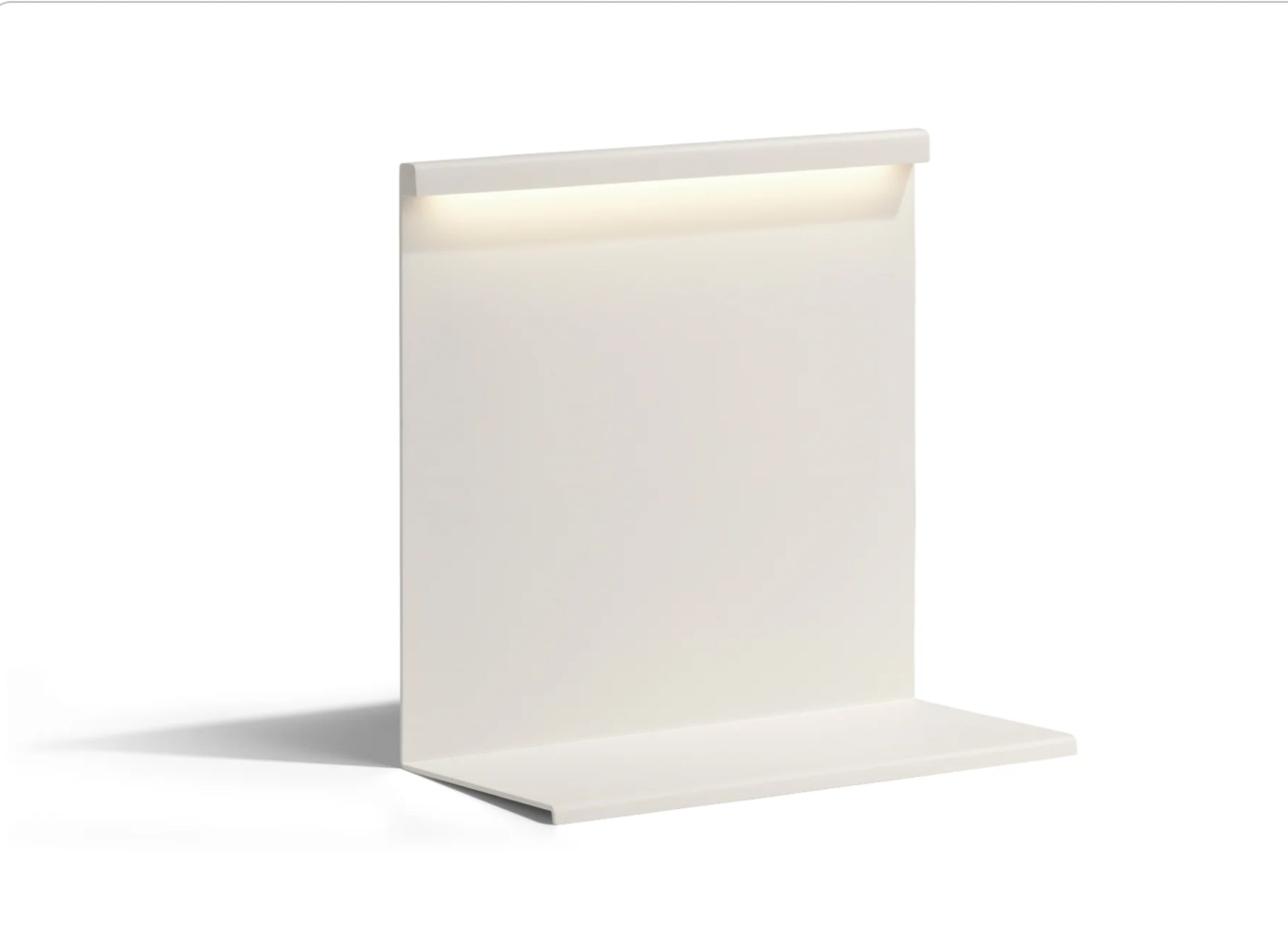
Insight/Research
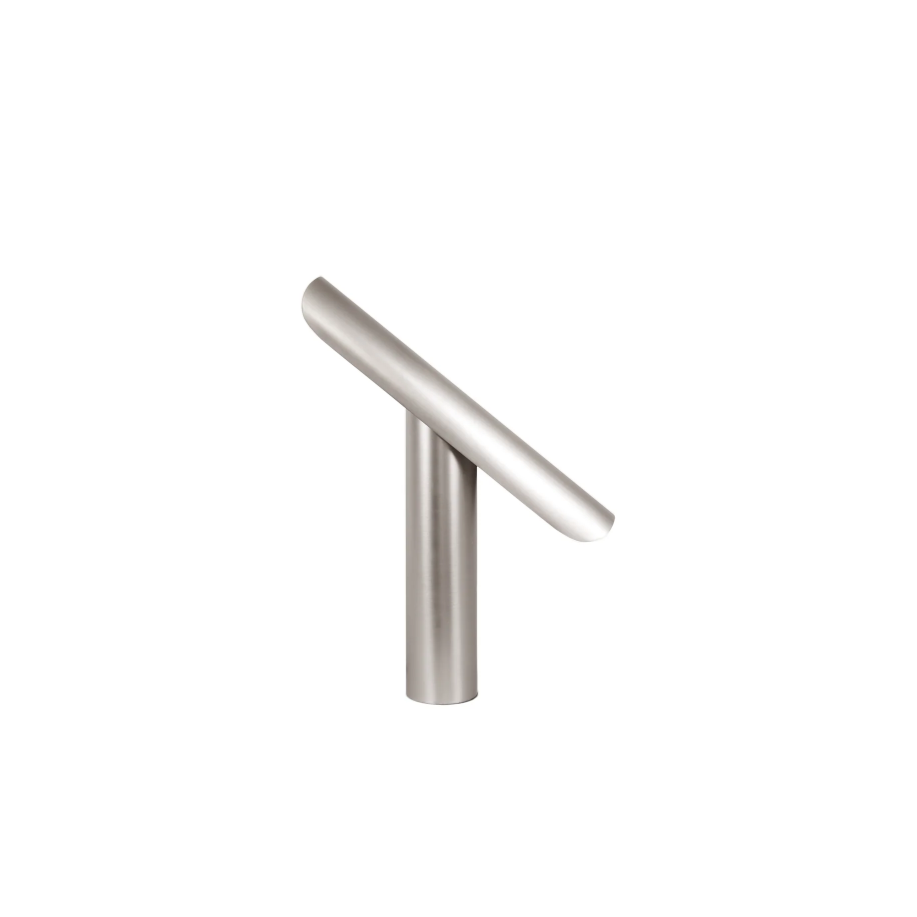
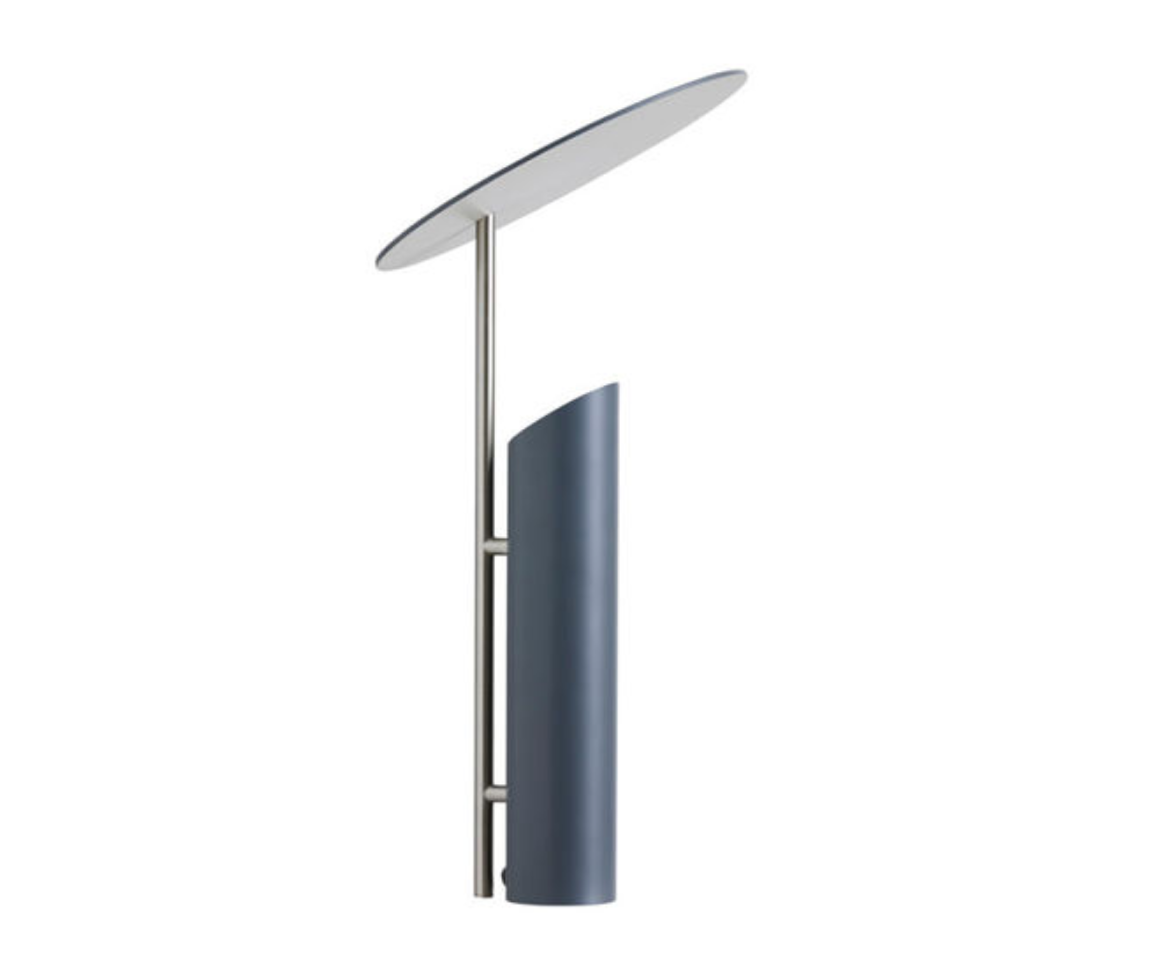
Research into ambient lighting and human attention revealed that harsh interruptions can disrupt focus, while gentle transitions encourage mindfulness and well-being:
Flow-friendly cues → gradual changes are less disruptive
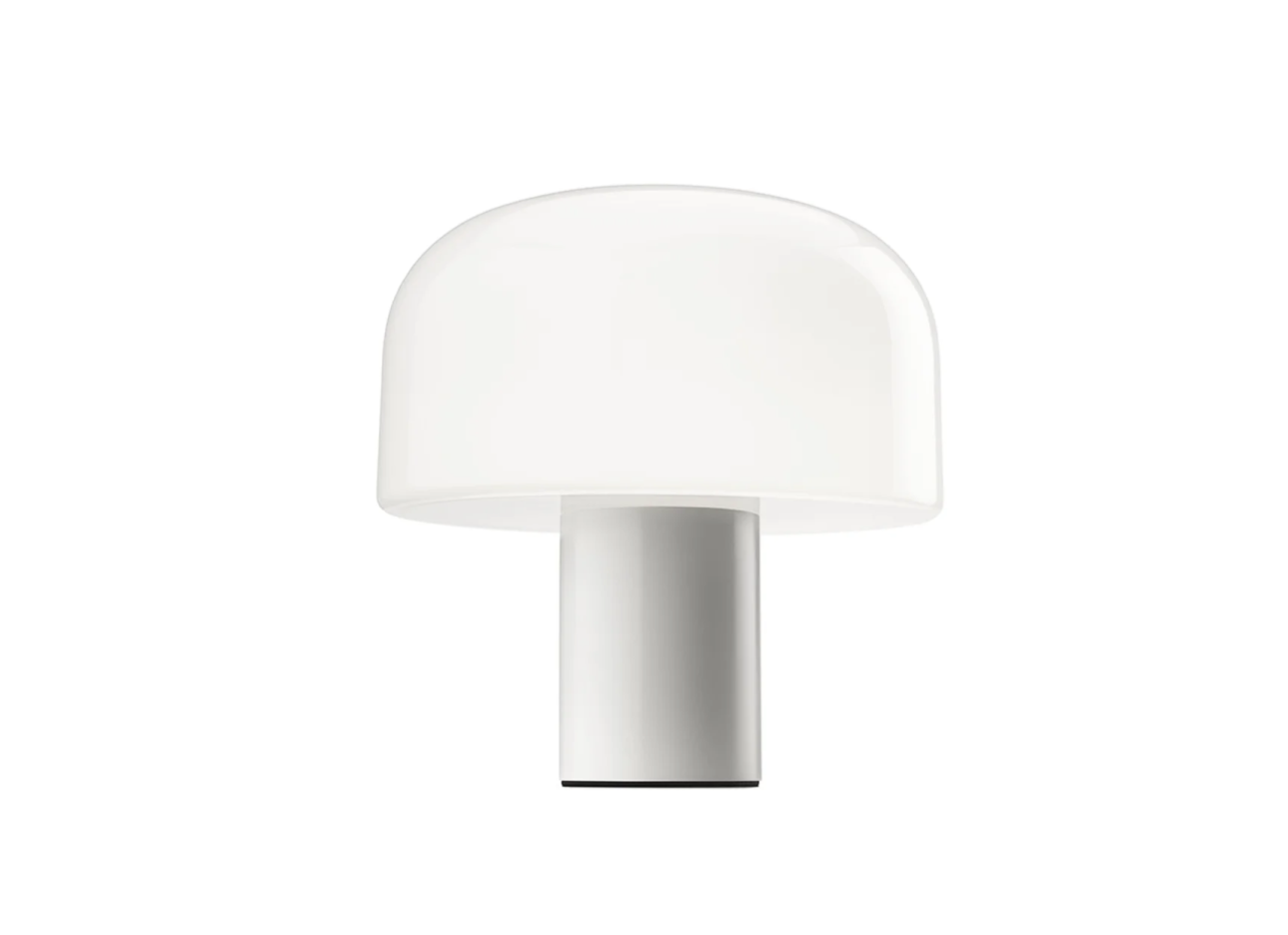
Ambient light inspiration → soft glows encourage calm, relaxed awareness
The insight was to design a lamp that communicates time passing through light intensity, letting the user notice it naturally when they are out of their flow state. Materials and form research suggested a smooth, approachable shape, ultimately taking inspiration from organic, mushroom-like forms.
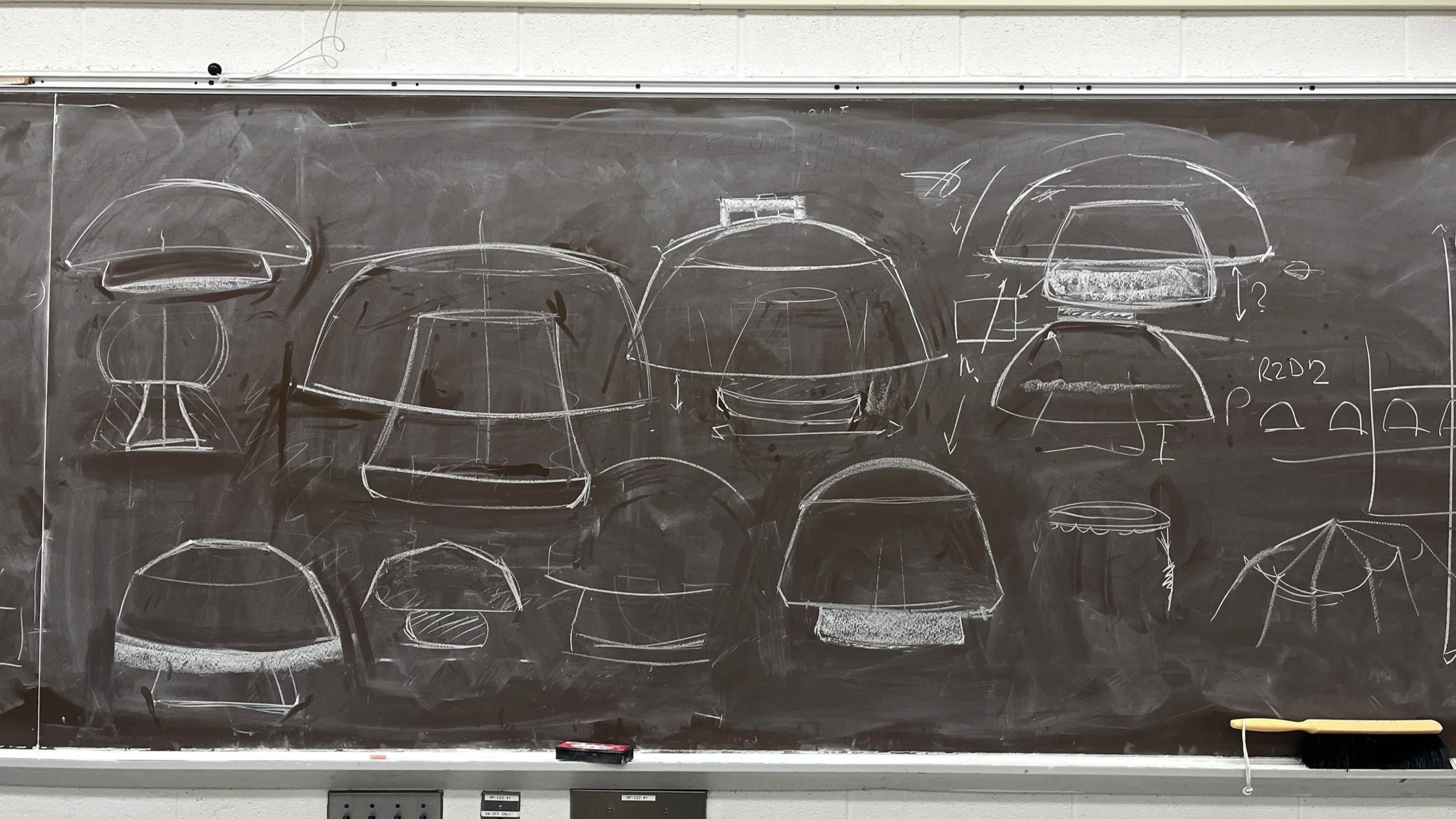
Early Thinking
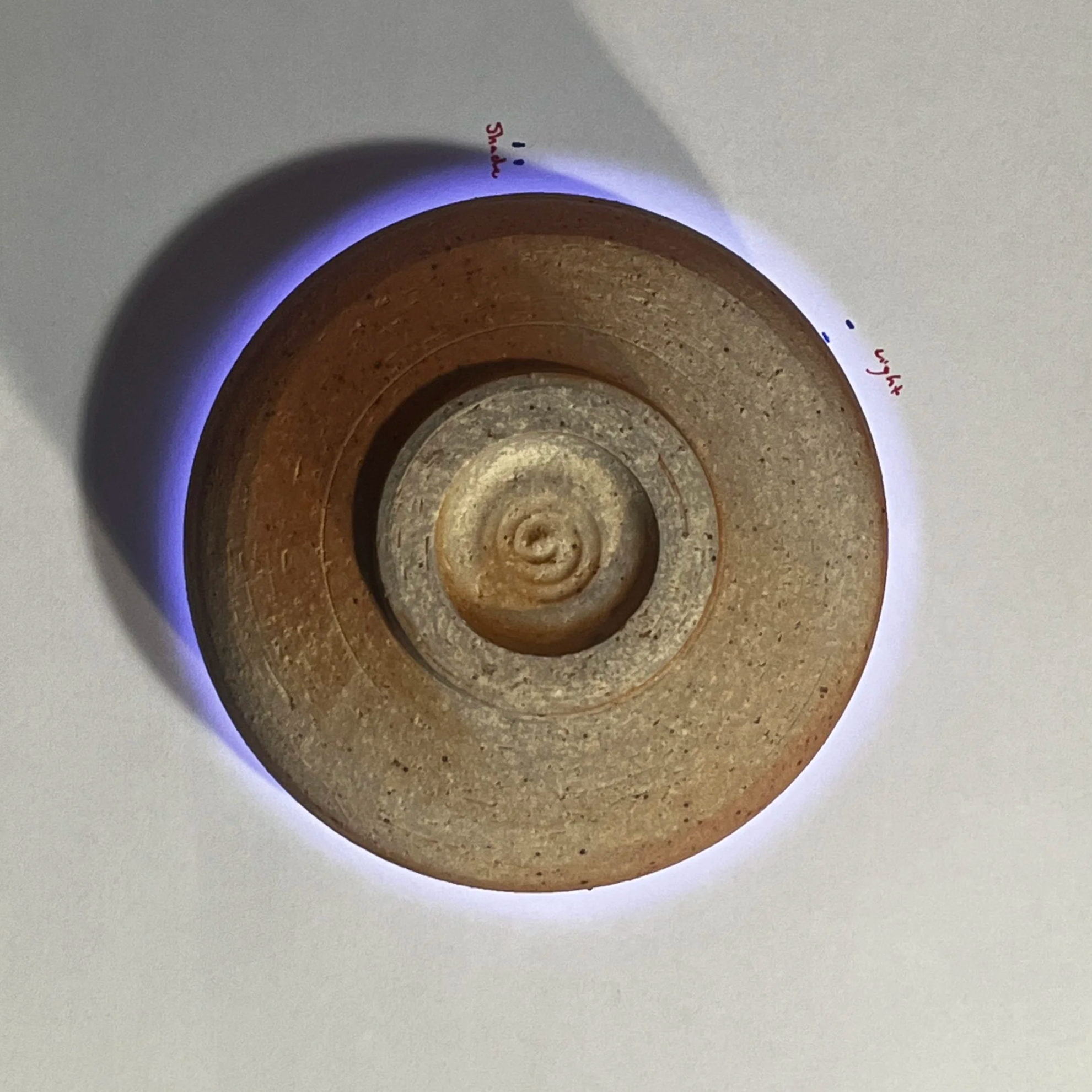
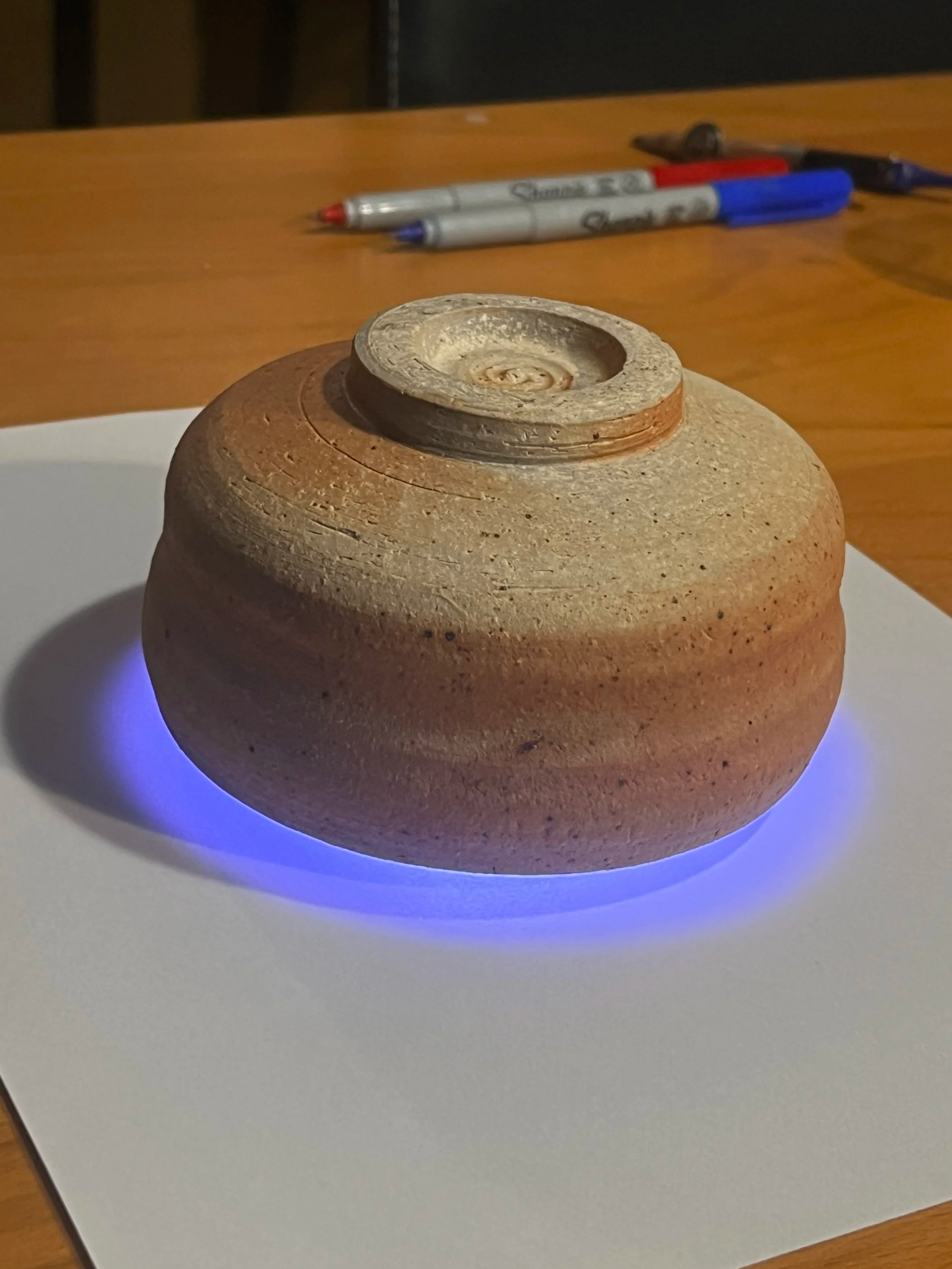
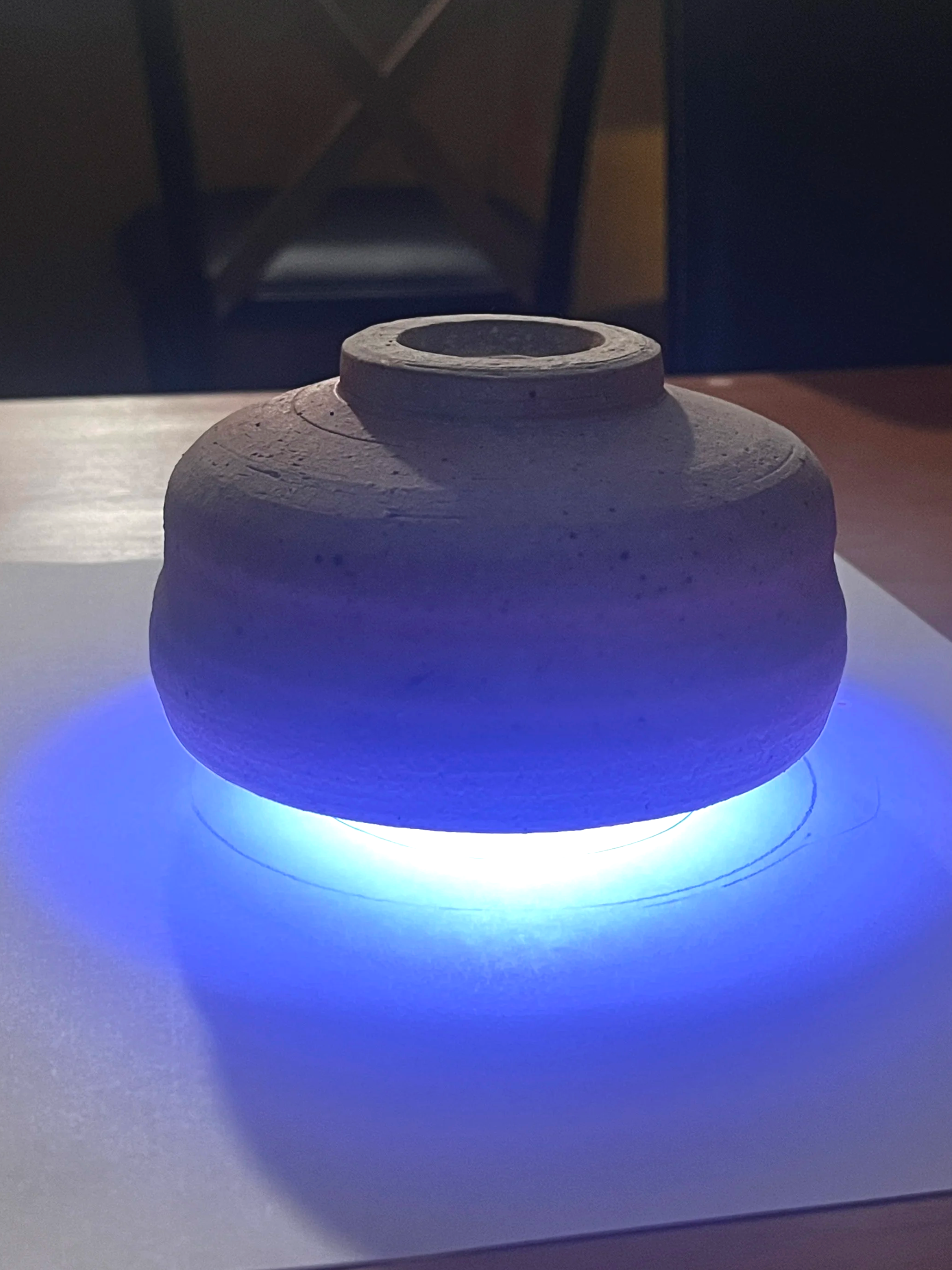
Exploration focused on creating a form that felt natural and comforting. Initial prototypes experimented with shapes, light diffusion, and intensity decay rates. The emphasis was on making the lamp a subtle companion rather than an attention-grabbing object.
Early tests highlighted the importance of light decay timing for user perception.
Iterated shapes to improve stability, light distribution, and tactile quality.
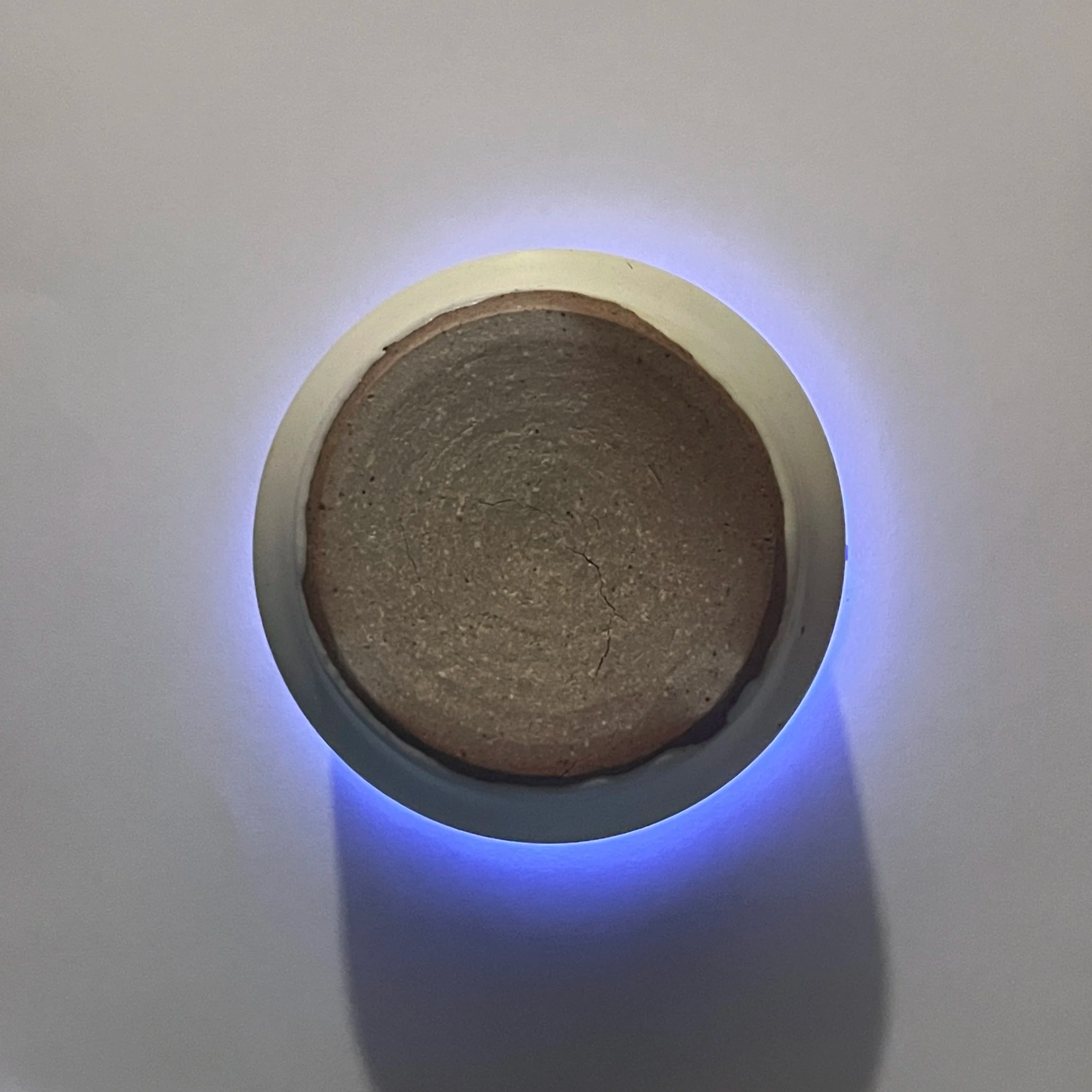
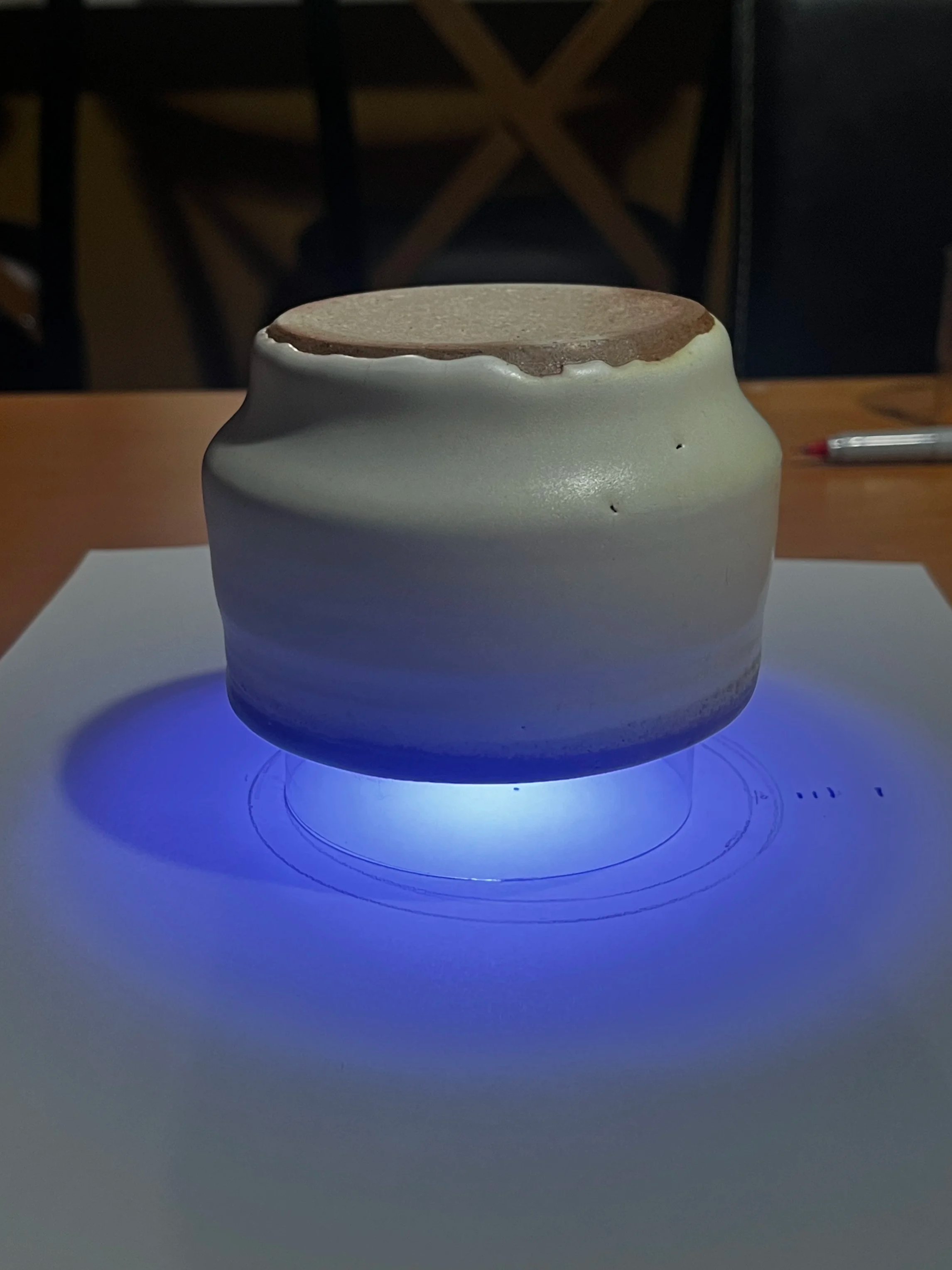
Prototyping & DEvelopment
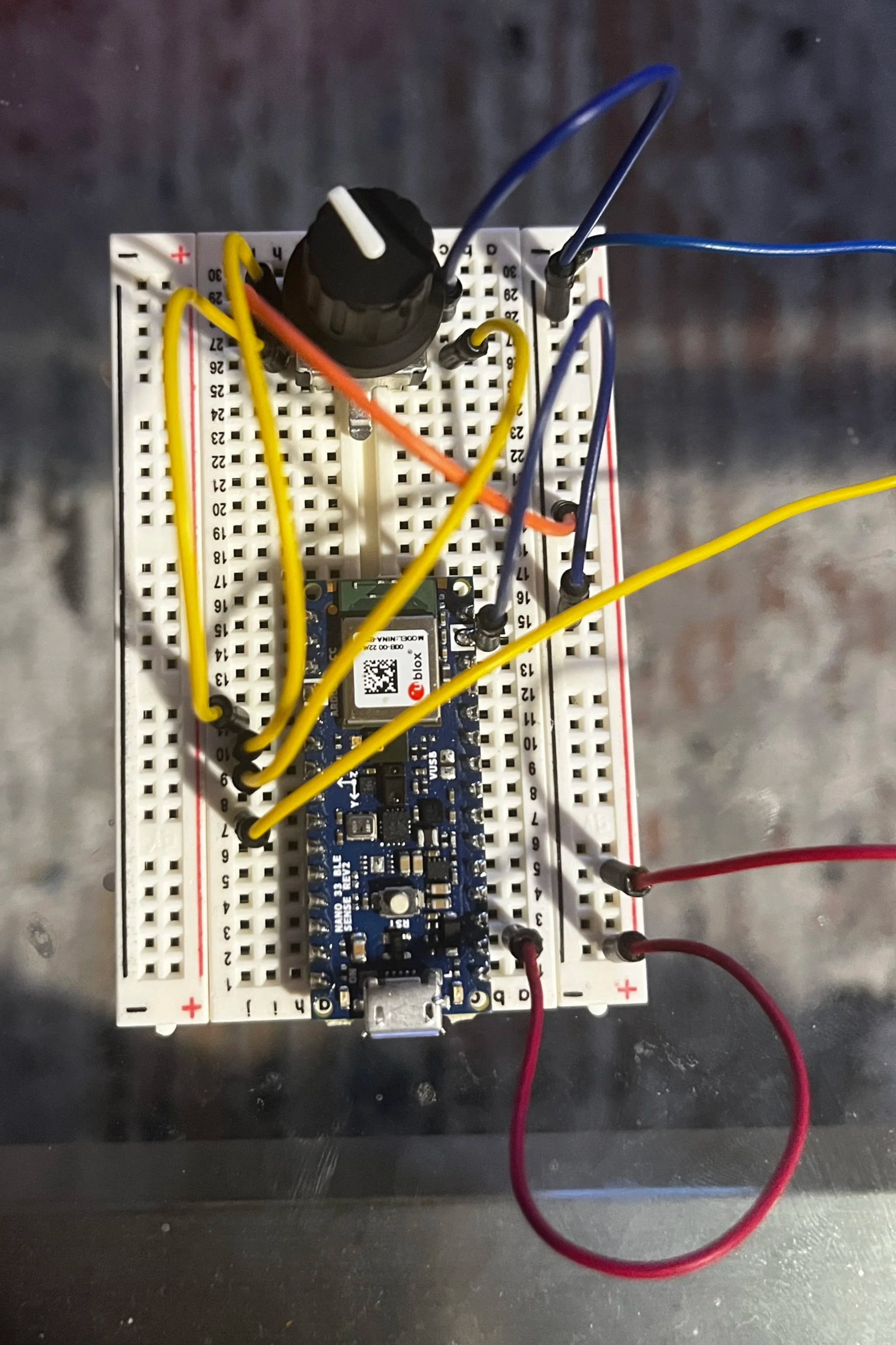
Electronics & Arduino → learning from scratch, programming the dimming decay curve took significant trial and error.
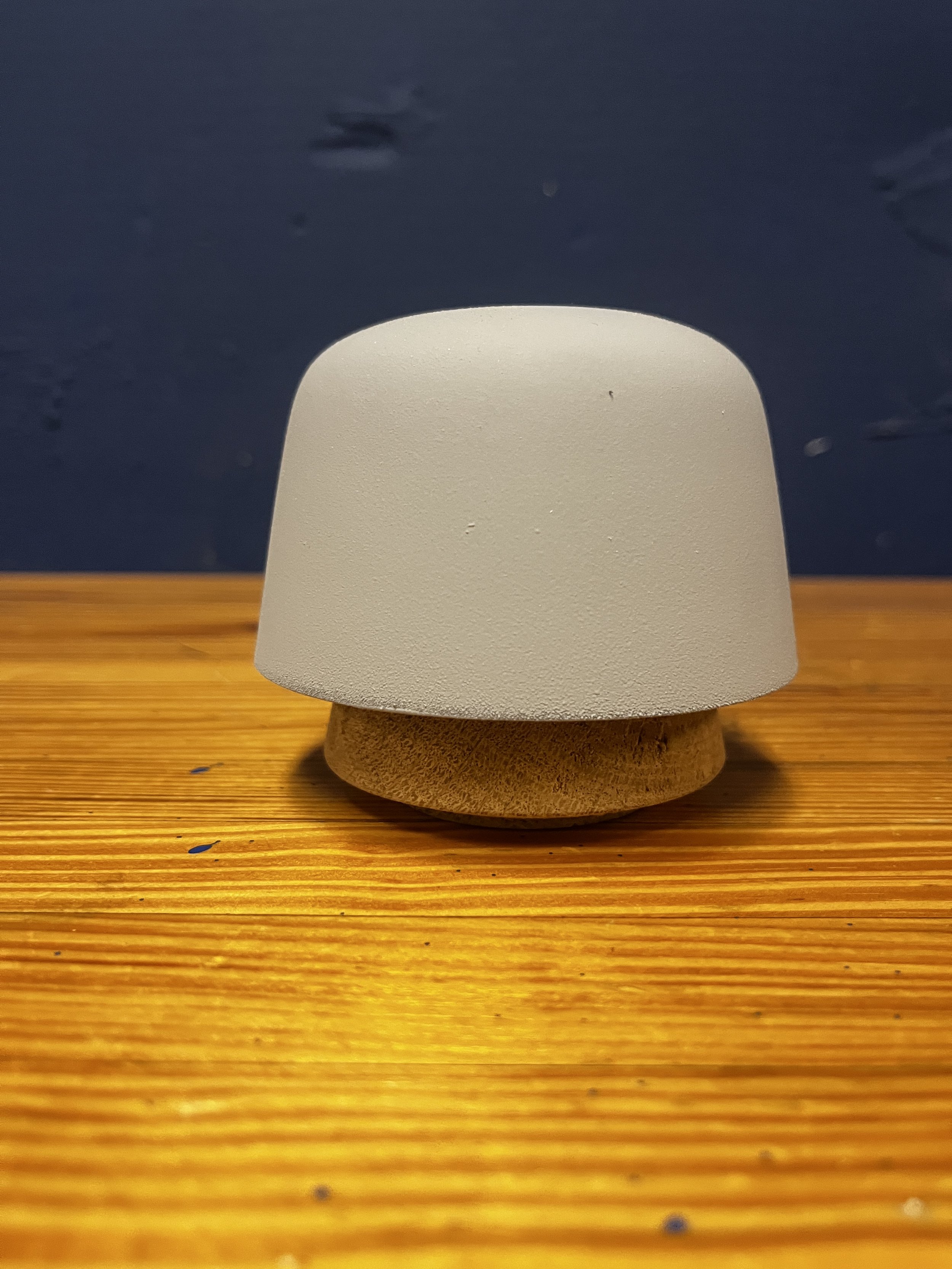
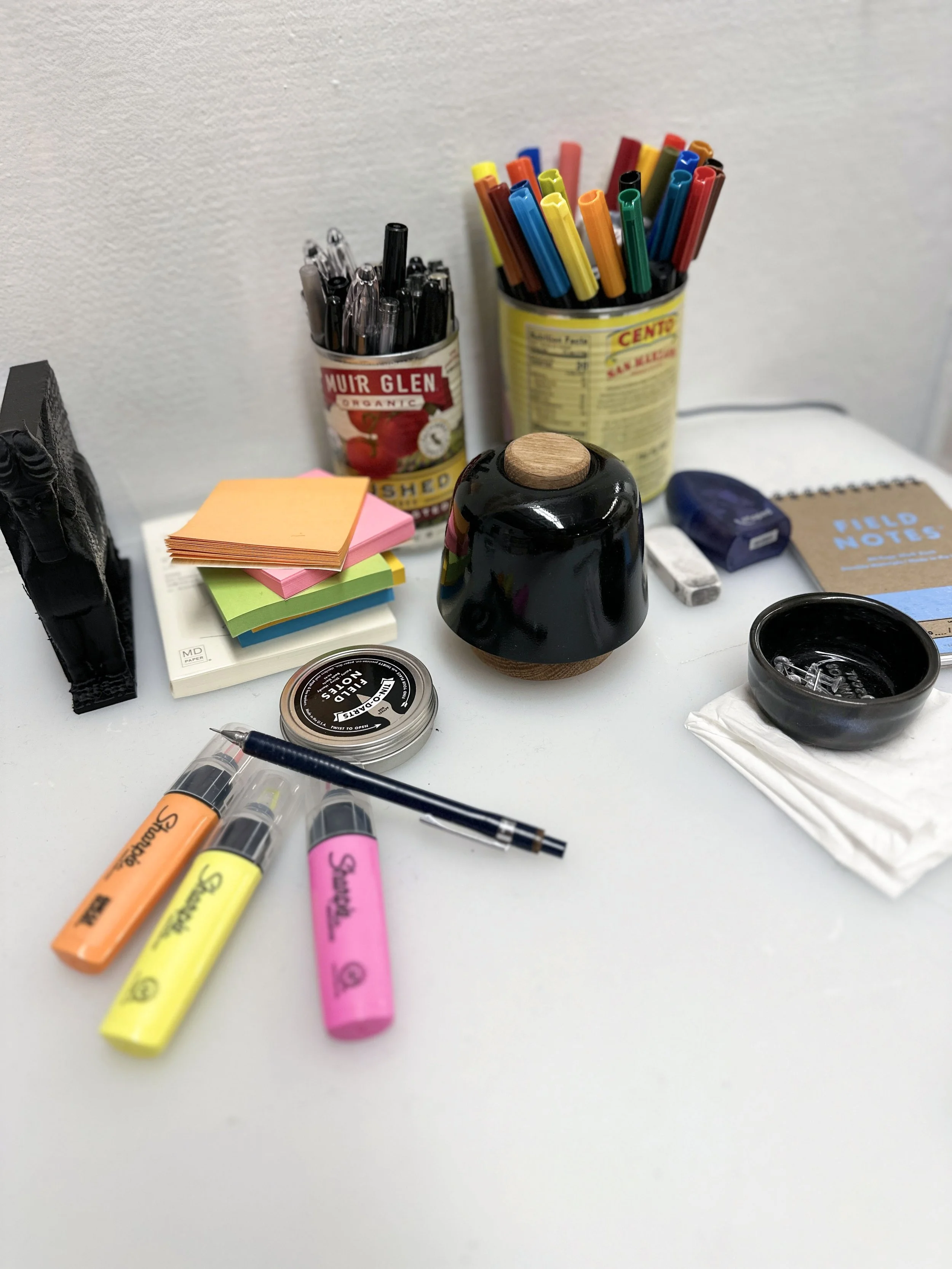
Material & Form → lathe work was surprisingly accessible but required adjustment to achieve smooth, consistent surfaces; especially considering the white oak I used for the base. included vacuum forming high impact polystyrene to get a uniform and smooth outer lamp shell.
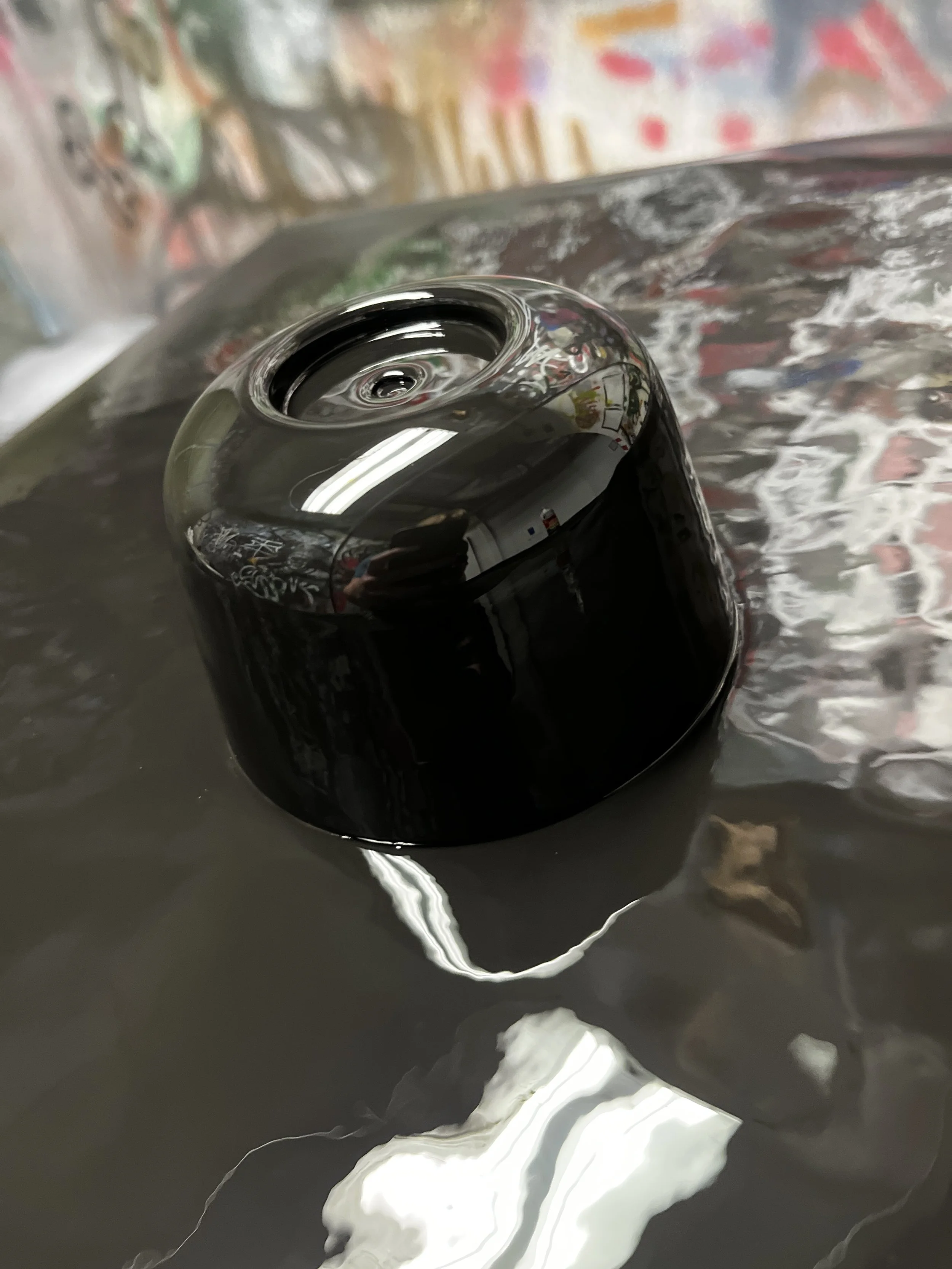
Surface Finish → achieving a clean gloss black finish was challenging, with multiple attempts to prevent drips and sanding issues.
Iteration
Multiple rounds of testing and refinements focused on:
Smoothing the lamp’s finish for a professional appearance
Adjusting the dimming curve for subtlety and usability
Integrating components compactly without affecting aesthetics
Key lessons included:
Electronics and coding can be learned in parallel with prototyping.
Small finish details have a big impact on perceived quality.
Iteration is essential; combining aesthetics, function, and electronics requires flexible problem-solving.
Final Outcome
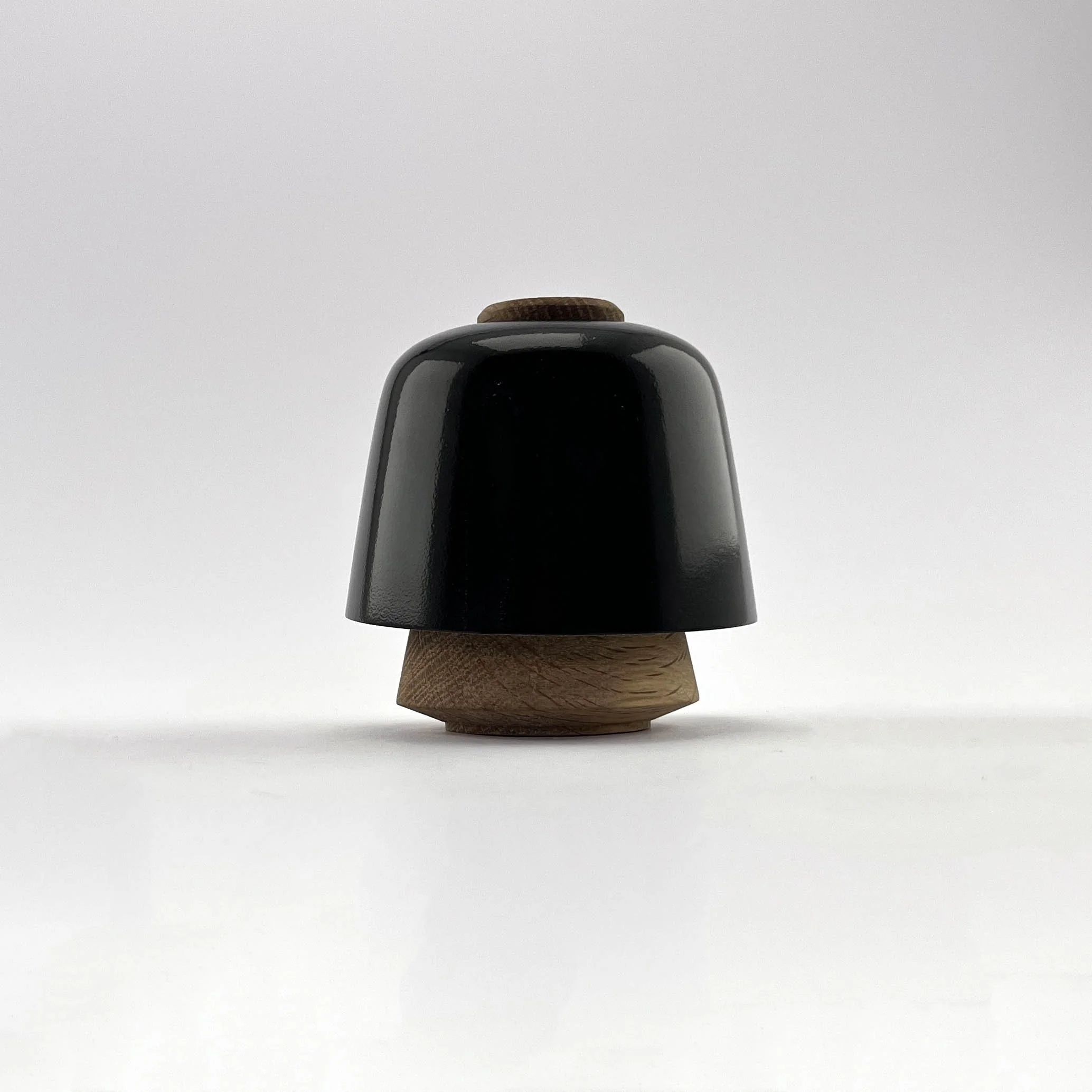
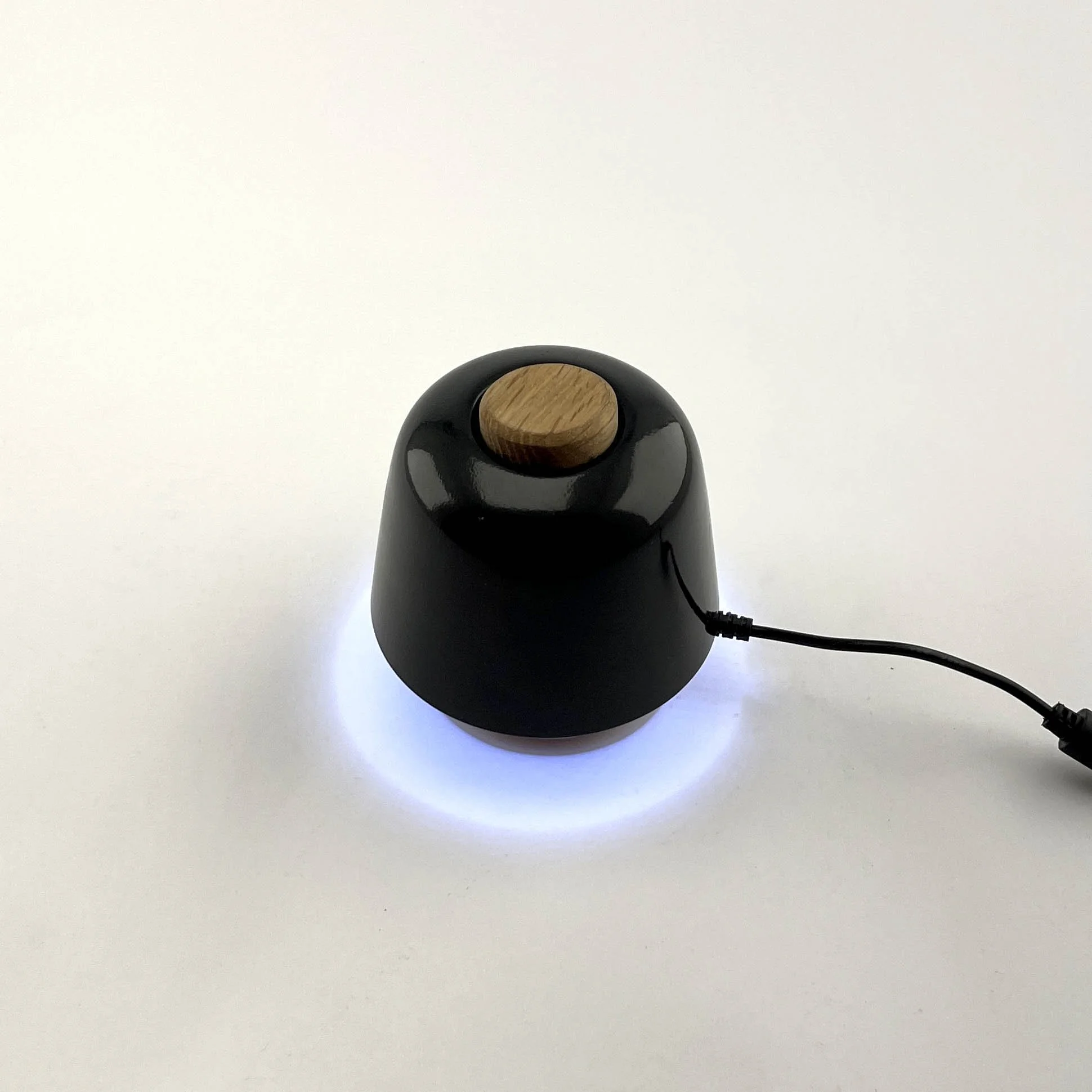
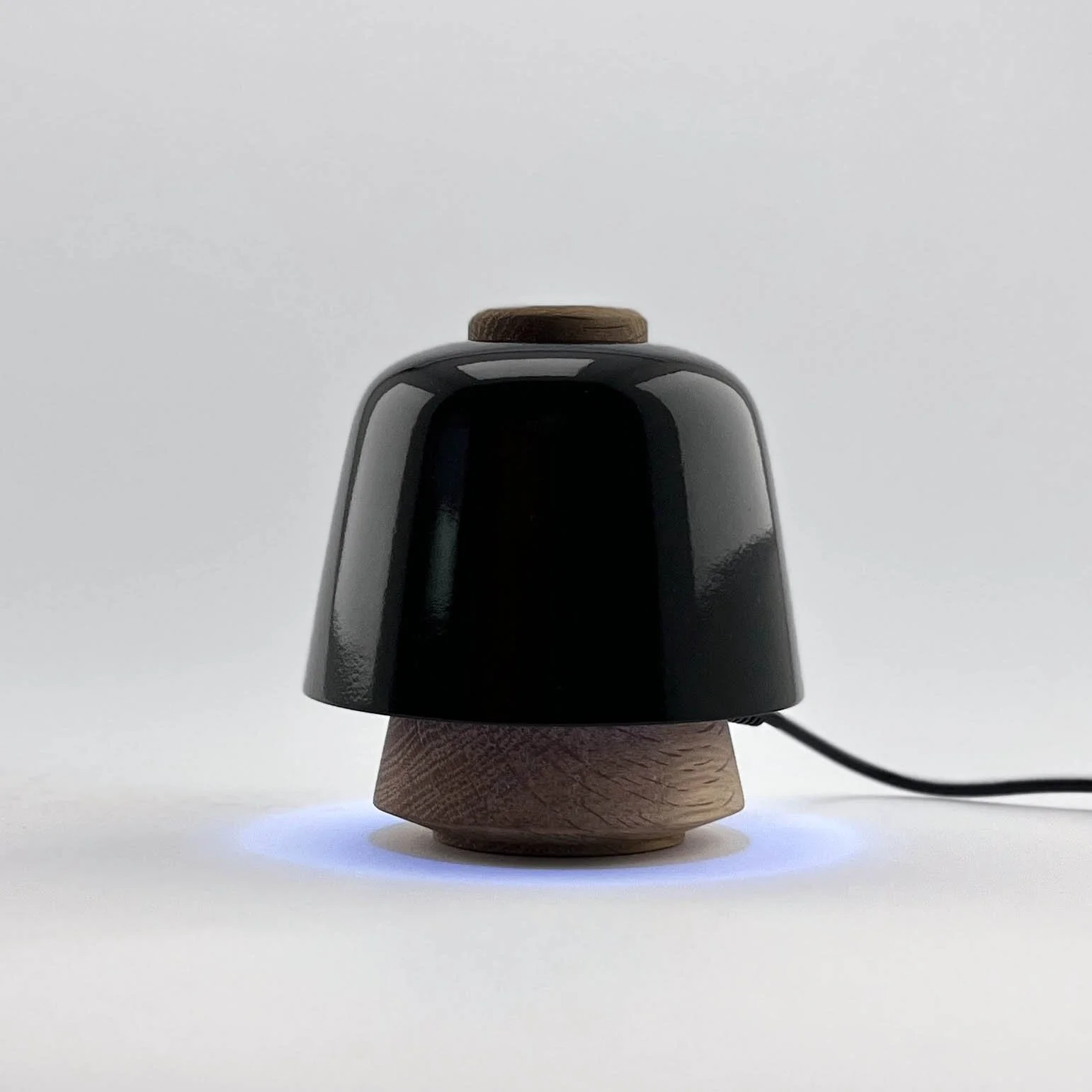
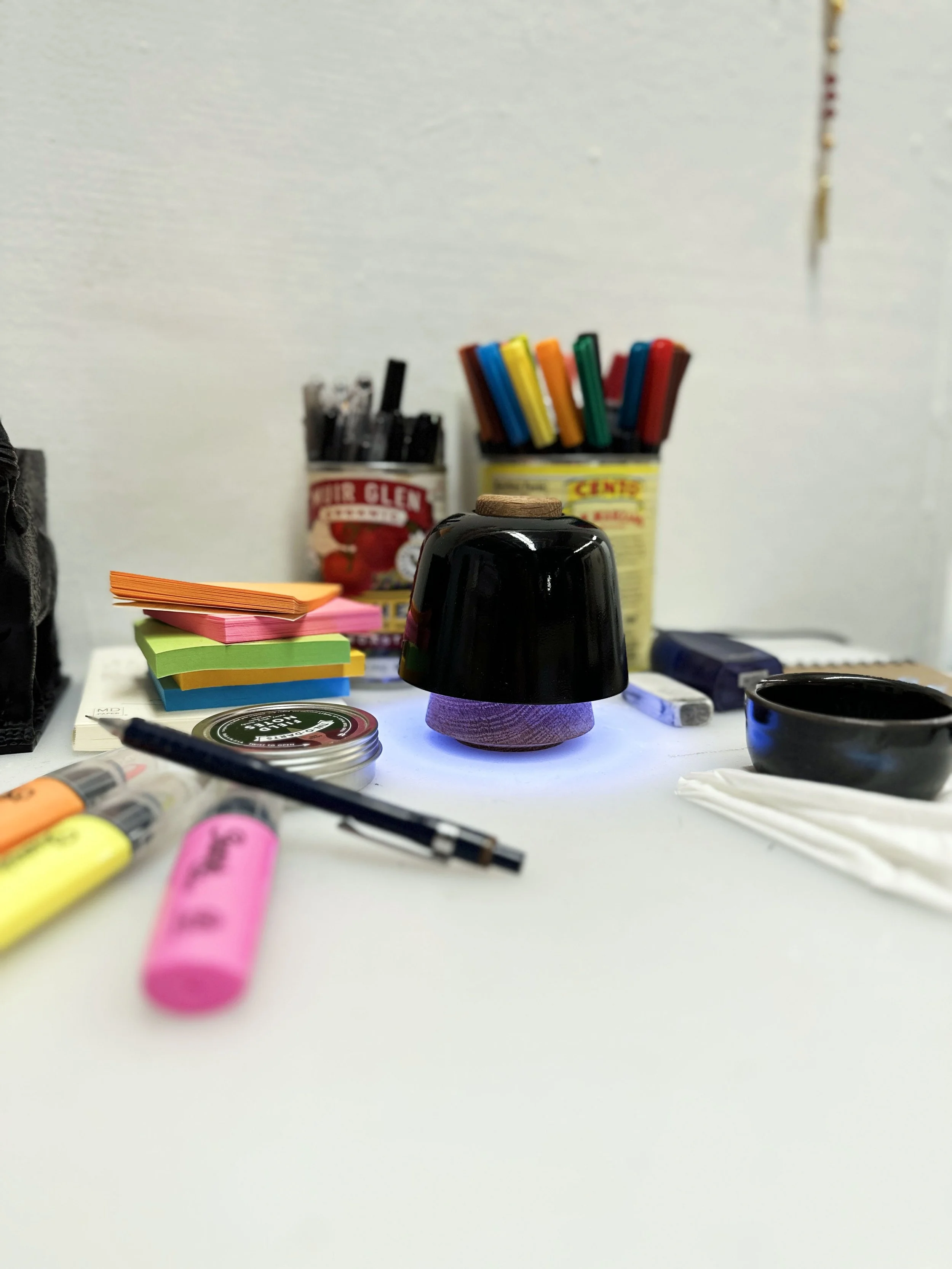
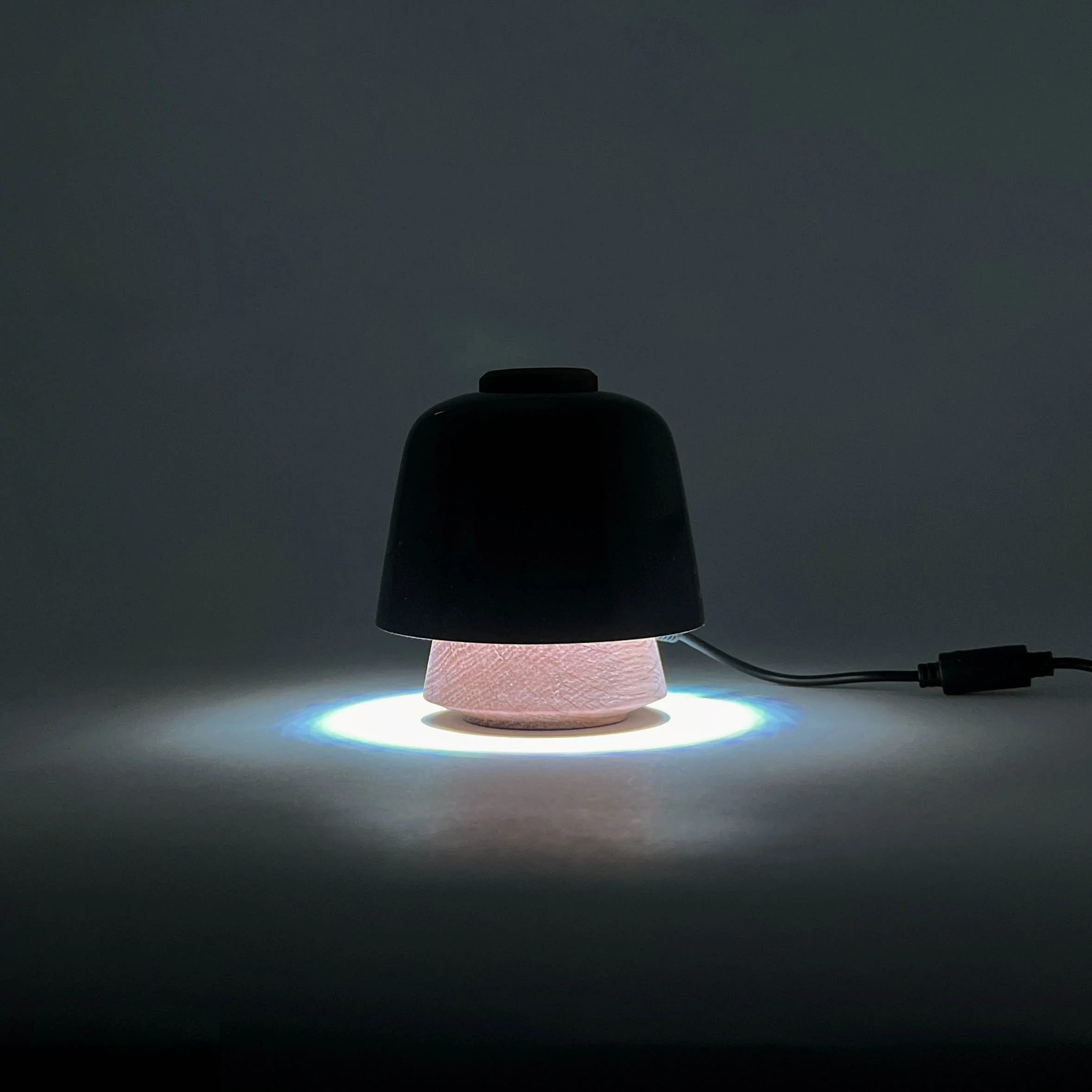
Dusk is an ambient lamp that dims gradually to signal breaks without disrupting focus.
Subtle decaying light communicates time passing naturally
Compact, approachable form with smooth, tactile finish
Integrated electronics and light programming create a mindful, user-friendly experience
Next steps
The next step for this project would be to revisit all materials and construction choices with manufacturability in mind, informed by what I learned while building the first prototype. Several decisions were made based on accessibility rather than long-term viability, so future iterations would involve selecting materials better suited for consistency, durability, and production. This would also include revising the internal layout and assembly approach based on issues encountered during fabrication, with the goal of creating a more resolved “looks like, feels like, acts like” prototype that more accurately represents a market-ready product.